
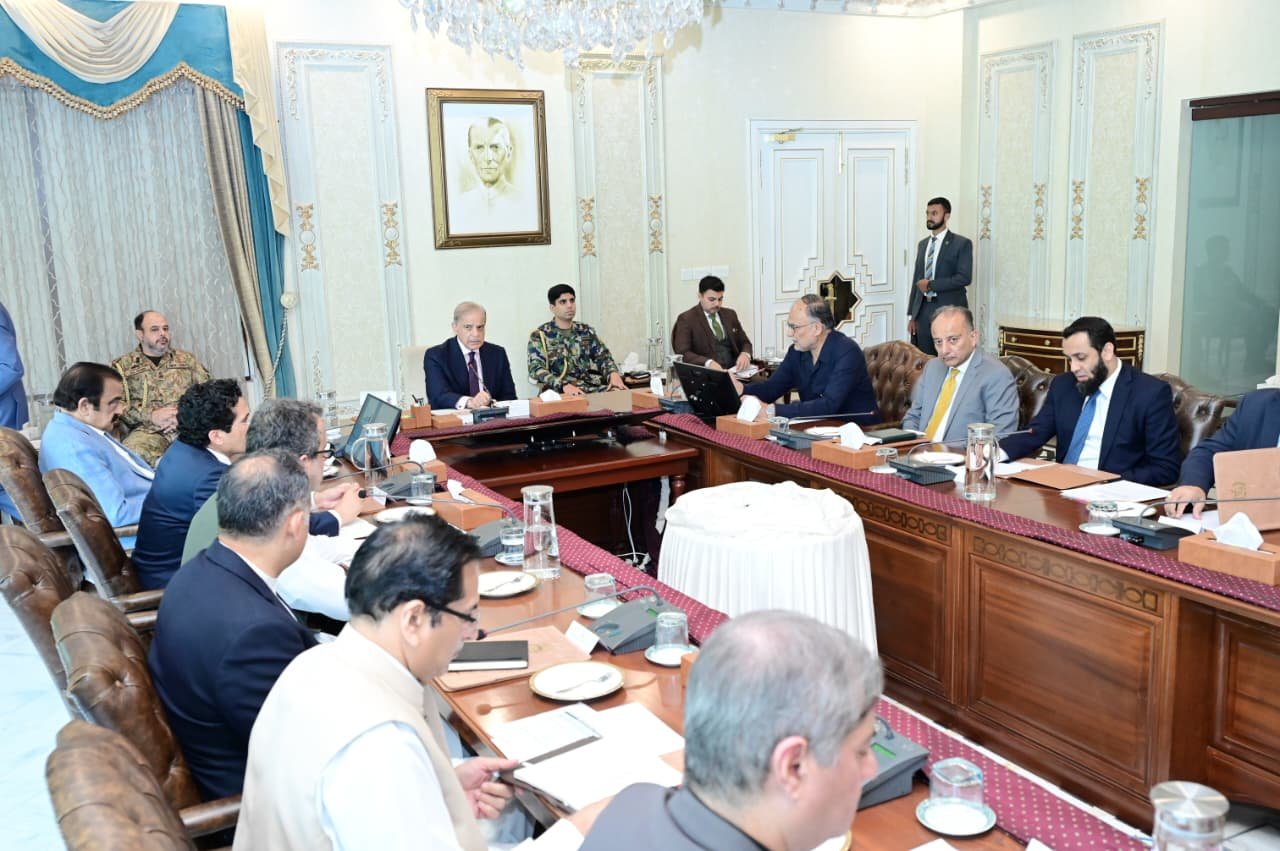
ISLAMABAD: Prime Minister Shehbaz Sharif has ordered authorities to ensure that electricity load shedding does not exceed two hours in any area as disruptions in RLNG supplies have reduced power generation amid regional tensions.
The prime minister issued the directive during a high-level meeting on electricity load management held in Islamabad, where he took notice of increasing load shedding in different cities and expressed strong displeasure over prolonged power outages.
The meeting was informed that the recent regional situation, tensions in and around the Strait of Hormuz and transmission-related difficulties had disrupted the supply of RLNG, resulting in a decline in electricity generation.
The reduced availability of RLNG has widened the gap between electricity demand and supply, forcing the authorities to resort to load management to maintain stability in the national power system.
Taking notice of the situation, the prime minister directed the relevant authorities to ensure that consumers in no area face more than two hours of load shedding.
He ordered the effective utilisation of all available resources to minimise power outages and instructed the authorities to take immediate measures to deal with disruptions in RLNG transmission.
The prime minister also directed the authorities to formulate measures keeping in view the prevailing regional situation and future energy requirements so that any further disruption in RLNG supplies does not unnecessarily increase pressure on electricity consumers.
The development comes at a time when electricity consumers in different parts of the country have been facing increased outages, with the government now seeking to place a limit on load shedding despite constraints affecting power generation.
The meeting also reviewed the situation arising from monsoon rains. Officials informed the prime minister that, except for six consumers in Rajanpur district, electricity supply to consumers across the country was not currently affected by monsoon rains.
The prime minister separately ordered the establishment of Consumer Grievance Redressal Committees at the level of all distribution companies (DISCOs) to provide consumers with a mechanism for resolving complaints relating to electricity supply and other power-sector issues.
He directed that the committees should include public representatives and become operational within one week.
The committees are expected to provide consumers with an institutional platform to raise complaints regarding electricity supply and seek their timely resolution at the DISCO level.
The meeting was informed that consumers can also register complaints through the electricity helpline 118. After registering a complaint, consumers are provided with a token number and informed about the expected time for resolution.
The prime minister directed the relevant authorities to ensure effective utilisation of the complaint-resolution mechanism and improve response to consumer grievances.
The government’s latest intervention highlights the growing importance of reliable RLNG supplies for the power sector, as disruptions in fuel availability can directly affect thermal power generation and consequently increase the pressure on the national electricity system.
The prime minister also stressed the need for advance planning to deal with possible disruptions in energy supplies, particularly in view of the evolving regional situation and potential challenges to energy transportation routes.
The meeting was attended by Planning Minister Ahsan Iqbal, Economic Affairs Minister Ahad Khan Cheema, Climate Change Minister Musadik Masood Malik, Information and Broadcasting Minister Attaullah Tarar, Petroleum Minister Ali Pervaiz Malik, Power Division Minister Sardar Awais Ahmad Khan Leghari, Prime Minister’s Adviser Rana Sanaullah, Minister of State for Finance and Railways Bilal Azhar Kayani and senior government officials.
The authorities have now been tasked with ensuring that available generation resources are fully utilised, RLNG supply disruptions are addressed and electricity consumers are protected from prolonged load shedding.