
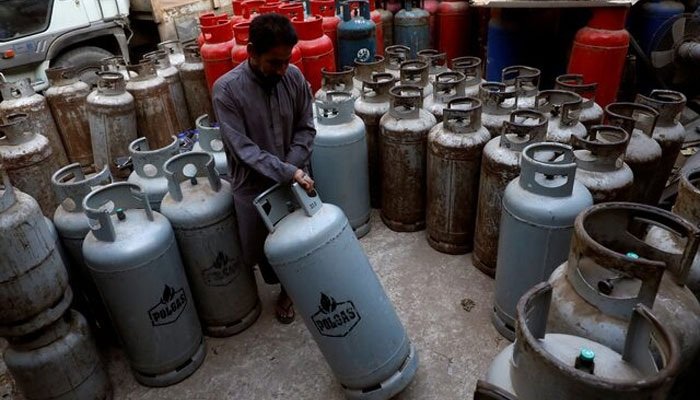
ISLAMABAD: Liquefied petroleum gas (LPG) prices remain as high as Rs600 per kilogram in several Pakistani cities despite the arrival of two vessels carrying imported supplies from Oman, with consumers yet to see a reduction in retail rates.
OGRA has fixed the maximum LPG consumer price at Rs279.34 per kg for October, equivalent to Rs3,296.23 for an 11.8kg domestic cylinder. However, retail prices in several cities have reportedly climbed to Rs530–600 per kg, significantly exceeding the notified rate.
Consumers in Lahore, Rawalpindi, Islamabad, Dera Ghazi Khan and Multan are paying around Rs600 per kg, while LPG is selling at Rs570 in Peshawar and Rs550 in Karachi and Quetta, according to industry sources.
indigenous_lpg_prices_notification_for_october_2026
The arrival of fresh imported supplies had raised expectations of a price reduction, but retail rates remain elevated, adding to household expenses, particularly for families that rely on LPG for cooking because pipeline gas is unavailable or supplied at inadequate pressure.
Two vessels carrying LPG from Oman have arrived at Port Qasim with reported cargoes totalling around 7,600 metric tonnes. The vessel Prianes unloaded 4,250 tonnes at the Sui Southern Gas Company (SSGC) terminal, while Alisa One delivered 3,083 tonnes at the Engro terminal.
The fresh imports are expected to improve domestic availability, although the extent to which they will ease retail prices depends on the distribution of supplies across the country and the extent to which lower supply costs, if any, are passed on to consumers.
Industry sources said domestic LPG production meets around 30 per cent of the country’s demand, while the remaining 70 per cent is met through imports, making the local market vulnerable to disruptions in imported supplies.
Irfan Khokhar, chairman of the LPG Distributors Association, urged the government to import LPG through bi vessels in a large quantity to help meet domestic demand. He also called for a judicial inquiry into alleged hoarding and artificial price increases, describing the situation as a conspiracy to malign the incumbent government.
Khokhar linked the supply uncertainty to tensions following the reported US-Israeli attack on Iran, arguing that the resulting uncertainty had affected LPG supplies.
Sources also said that some previously disrupted LPG supplies through the Iran border had begun to resume, subject to conditions and approvals. The resumption could provide an additional source of supply, although its impact on the market will depend on the volume entering Pakistan and the continuity of cross-border shipments.
Despite the arrival of imported cargoes and the reported resumption of some cross-border supplies, consumers have yet to see a significant reduction in retail prices. The situation has renewed calls for stronger monitoring of the LPG market to prevent hoarding, ensure transparent distribution and protect consumers from excessive charges.
Any sustained reduction in prices will depend on improved supply, timely distribution and effective action against any proven market manipulation.