
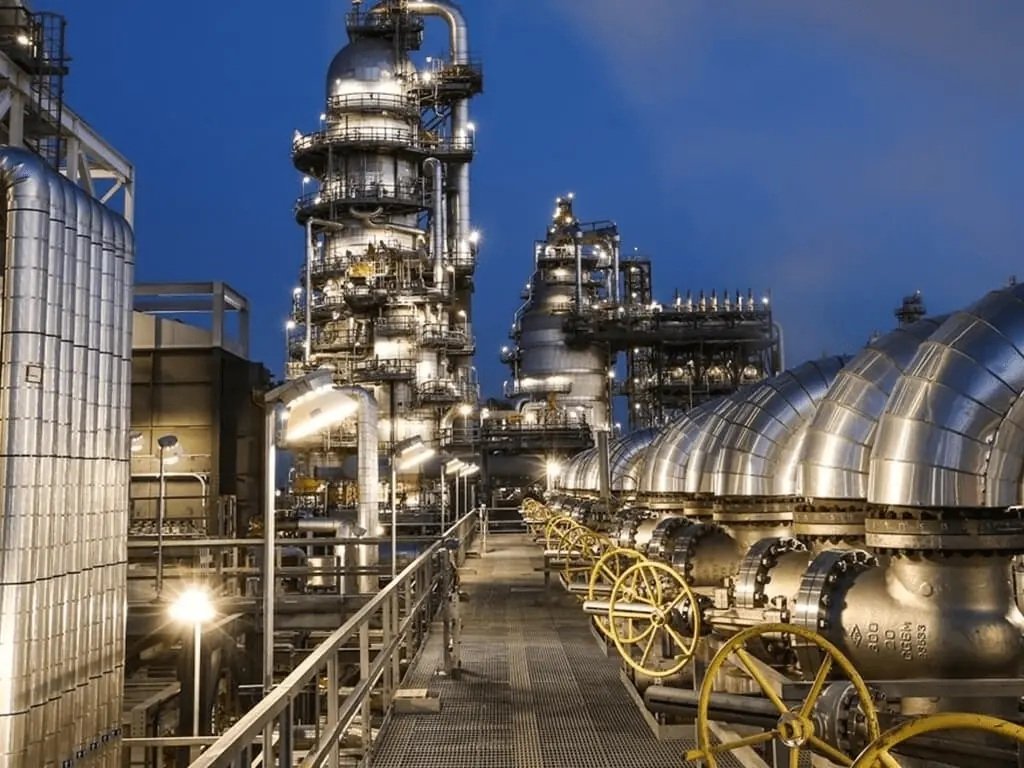
ISLAMABAD: The Federal Cabinet has directed domestic refineries to surrender an estimated Rs49 per litre petrol price differential to the government under a revised pricing mechanism, with the amount to be deposited into the Petroleum Levy account and the resulting benefit passed on to consumers through a corresponding reduction in petrol prices.
The decision, communicated by the Petroleum Division on October 30, introduces a revised formula for determining the import and ex-refinery prices of motor spirit (MS), requiring refineries to deposit the difference between the two prices into the government’s designated account.
According to Petroleum Division letter No. PL-3(457)/2026-86, the Federal Cabinet considered a summary submitted by the Petroleum Division on October 30 and approved four changes to the petrol pricing mechanism during the Iran-US war period.
Under the first change, the import price of petrol will be determined on the basis of the actual import cost of the relevant Pakistan State Oil (PSO) cargo. If the actual import cost is unavailable for daily pricing, the premium, incidentals and customs duty of the last available cargo will be used to determine the import price.
Under the second change, the ex-refinery price payable to domestic refineries will be calculated by retaining premiums, incidentals and customs duty at the levels applicable on March 7, 2026, before the Iran-US war. This arrangement will remain in place for the next 30 days.
The third component requires refineries to surrender the difference between the import price and the ex-refinery price to the government under the Petroleum Levy head of account C03901.
Under the fourth component, the government has committed to passing on the entire financial benefit generated through the Petroleum Levy adjustment to motor spirit consumers exclusively through a corresponding reduction in petrol prices.
According to industry sources, the estimated Rs49 per litre financial impact comprises two components. The incorporation of pre-war premiums and incidentals into the MS pricing mechanism is estimated to cost refineries around Rs35 per litre, while another Rs14 per litre diversion from their customs duty recovery towards reducing the Petroleum Levy takes the total adverse impact to approximately Rs49 per litre.
The amount is not an additional levy being imposed on petrol consumers. Rather, it represents the estimated differential that refineries will surrender under the revised arrangement, with the government intending to pass on the resulting benefit through lower retail petrol prices.
The Petroleum Division has directed all refineries to deposit the differential Petroleum Levy into account C03901 in accordance with OGRA price notifications and Petroleum Levy notifications issued from time to time.
It has also made daily reporting mandatory, requiring refineries to furnish details of domestic motor spirit sales, along with Computerised Payment Receipts (CPRs) and deposit challans, to the Petroleum Division and the Oil and Gas Regulatory Authority (OGRA) for verification and reconciliation.
The instructions have been issued to the chief executives of Pak-Arab Refinery Limited (PARCO), Pakistan Refinery Limited (PRL), Attock Refinery Limited (ARL), National Refinery Limited (NRL), Cnergyico and ENAR.
The new arrangement has triggered serious concerns in the refining industry over the impact of repeated government interventions on refinery profitability, operational sustainability and investment in the country’s refining sector.
Usama Qureshi, Vice Chairman of Cnergyico, questioned how refining companies could sustain operations when the government repeatedly changed the rules governing their revenues.
“How can you operate an industry like refining with such inconsistent policies, where the goalposts are changed every other day? How can the government ask an industry to sell its products below cost? Who will invest in this sector when policies remain so unpredictable?” Qureshi questioned.
He said the latest petrol pricing intervention had compounded the difficulties already confronting the refining industry, which was struggling to recover prevailing diesel cracks because of earlier government restrictions on diesel pricing.
The additional intervention in petrol pricing could further compress gross refining margins (GRMs), potentially pushing them into negative territory, he warned.
Qureshi also highlighted the financial implications of Cnergyico’s crude procurement strategy, saying the company had been importing higher-priced crude oil from the United States, which yields a greater proportion of gasoline compared with traditional Middle Eastern crude grades.
As gasoline accounts for a relatively larger share of the products recovered from the crude processed by the refinery, changes in petrol pricing have a greater impact on its overall refining economics.
He argued that the latest pricing arrangement effectively penalised the company for diversifying its crude supplies, while restrictions on diesel pricing had already affected its overall refining margins.
Separately, Attock Refinery Limited (ARL) Chief Executive Officer Adil Khattak expressed serious concern over the government’s latest changes to the MS pricing mechanism, warning that the decision would impose another substantial financial setback on refineries without meaningful consultation.
Khattak said refineries had already agreed twice, at the government’s request, to cap their High-Speed Diesel (HSD) spread, first at $41.89 per barrel and subsequently at $38 per barrel.
He said incorporating pre-war premiums and incidentals into the MS pricing mechanism would reportedly cost refineries around Rs35 per litre. An additional diversion of Rs14 per litre from their customs duty recovery towards reducing the Petroleum Levy would take the total adverse financial impact to approximately Rs49 per litre.
Khattak said the decision undermined the foundation of the Brownfield Refineries Upgradation Policy, which specifically provides for depositing proceeds from the 10 percent customs duty into dedicated refinery accounts to partially finance their upgradation projects. Diverting these funds for other purposes, he argued, would defeat the very objective of this provision.
He further warned that the decision undermined the policy’s explicit assurance of protection against adverse changes during the project execution period, saying such assurances were fundamental to ensuring the financial viability and bankability of multibillion-dollar refinery upgradation investments.
The concerns are significant because refinery profitability depends on the combined value of petrol, diesel and other petroleum products recovered from each barrel of crude oil. Restrictions on the pricing of individual products can therefore affect the overall economics of crude processing, particularly when refineries are unable to recover market-based margins on their output.
The latest intervention comes at a time when Pakistan is seeking billions of dollars in investment to modernise and upgrade its existing refineries under the Brownfield Refineries Upgradation Policy.
The proposed investments are aimed at upgrading processing facilities, improving fuel quality, increasing operational efficiency and reducing dependence on imported petroleum products. However, these projects require substantial capital expenditure and long investment recovery periods, making policy consistency essential for investment decisions.
Refinery executives have repeatedly expressed concerns that frequent changes in pricing formulas, particularly without adequate industry consultation, make it difficult to forecast revenues, assess project returns and commit capital to long-term modernisation plans.
The government’s 30-day pricing arrangement has consequently raised broader questions about the sustainability of domestic refining operations, particularly as companies face restrictions on recovering market-based margins on both petrol and diesel.
For the refining industry, the issue extends beyond the estimated Rs49 per litre petrol price differential. It concerns the recovery of refining costs, the protection of policy commitments, the financial viability of planned upgradation projects and whether investors will commit billions of dollars to modernising Pakistan’s domestic refining capacity amid an unpredictable pricing regime.