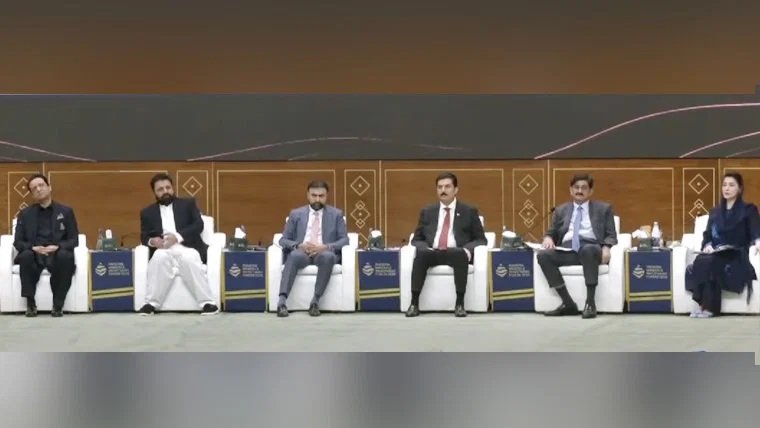
ISLAMABAD: Provincial governments on Thursday offered security arrangements, one-window facilitation, financing and regulatory support to attract global mining investment at the Pakistan Minerals Investment Forum 2026.
The commitments were made by the chief ministers and representatives of the provinces and territories during the two-day forum in Islamabad, where Pakistan sought to present its mineral resources and investment opportunities to international companies.
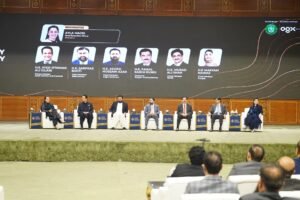
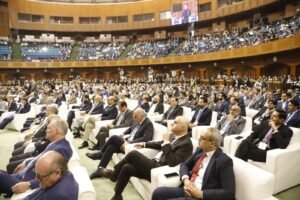
More than 5,000 local and international delegates from over 60 countries are participating in the event, according to figures shared by the forum organisers.
Balochistan Chief Minister Mir Sarfraz Bugti said his government was committed to providing a secure environment for mining investors and projects. He said a separate security division was being established for the Mineral Corridor to protect investment and mineral-related activities.
Inviting local and foreign companies to invest in the province’s mineral, oil and gas sectors, Bugti said his government wanted to reduce bureaucratic hurdles and make investment easier. He also stressed that local communities must benefit from mineral development.
He highlighted the potential of the Reko Diq project and referred to oil and gas prospects in Sarona, as well as the possibility of establishing a fertiliser city in Sui using low-BTU gas.
Punjab Chief Minister Maryam Nawaz Sharif outlined a range of incentives, including interest-free financing, concessional land leases and one-window facilities for investors.
She said the provincial government was offering financing of up to Rs5 billion, with the government bearing the interest cost. Investors could also benefit from concessional land leases and incentives in designated industrial estates.
Maryam said Punjab had significant mineral potential, including gold, copper, iron ore, coal, granite, marble, pink salt and gemstones. She also referred to surveys being conducted in rivers to explore gold deposits, saying preliminary evidence had been found in river sediments.
She said revenue of the Punjab Mines and Minerals Department had increased from Rs10 billion to Rs40 billion over the past two and a half years. The province was also digitising mining operations and using drone technology to improve monitoring.
Sindh Chief Minister Syed Murad Ali Shah said 27 minerals had been identified in the province, while Thar coal remained one of its major natural resources.
He said the provincial government was encouraging public-private partnerships and cooperation with Chinese companies to develop mineral resources. Preliminary feasibility studies were under way, while the government was working to strengthen the regulatory framework and introduce transparent auctions for mineral concessions.
Murad Ali Shah said the Sindh Business One Stop Shop would help facilitate investors. He stressed the need to move beyond extraction and promote value addition through modern technology.
Khyber Pakhtunkhwa Governor Faisal Karim Kundi also offered one-window facilitation and security support to investors. He said the provincial government was establishing a Mines and Minerals Company to promote investment and development in the sector.
Kundi said more than 100 mineral sites had been identified under an initiative involving the Geological Survey of Pakistan, with 69 sites currently under process. He also highlighted the province’s position as the country’s second-largest gas producer.
Azad Jammu and Kashmir Prime Minister Barrister Syed Iftikhar Ali Gillani said the region had deposits of ruby, tourmaline, topaz, granite, coal and bauxite. He said developing these resources required specialised expertise, particularly for mining in high-altitude areas, and called for harmonisation of relevant legislation to facilitate investment.
Gilgit-Baltistan Chief Minister Syed Amjad Hussain highlighted opportunities in precious metals and gemstones but said improving connectivity remained a major challenge for mineral development in the region.
Deputy Prime Minister and Foreign Minister Ishaq Dar said Pakistan wanted to develop the entire mineral value chain rather than limit its role to extracting and exporting raw materials.
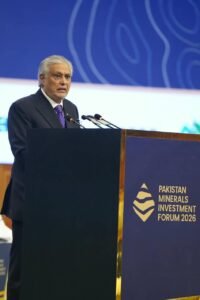
He said the country needed investment in exploration, technology, processing and refining to create greater economic value from its mineral resources. Developing the sector could also generate opportunities in engineering, automation, manufacturing and related services.
Dar said demand for copper and other minerals was expected to increase as countries moved towards clean energy technologies and electric vehicles. He described mineral development as an important next phase of Pakistan’s economic transformation and highlighted Balochistan’s potential in this regard.
He said the Foreign Ministry and Pakistan’s diplomatic missions were working to promote the country’s mineral investment opportunities internationally.
Finance Minister Muhammad Aurangzeb said macroeconomic indicators had improved, with the fiscal deficit at its lowest level in 22 years and the country recording three consecutive primary surpluses.
He said foreign exchange reserves stood at $21.5 billion, covering more than three months of imports, and highlighted ongoing reforms aimed at supporting export-led growth.
Aurangzeb said reforms in taxation, the energy sector, privatisation and public finance were important for improving the investment climate. He also emphasised the need to ensure that foreign investors could repatriate profits and dividends.
He described mining as a potential driver of economic growth, exports and foreign investment.
Petroleum Secretary Hamed Yaqoob Sheikh said Pakistan had significant deposits of copper, gold, chromite, coal, gemstones and other minerals. He stressed the need for coordination between federal and provincial governments to ensure transparency and predictability for investors.
Referring to Reko Diq, he said several projects were ready for development. He also said Pakistan was preparing to resume offshore exploration after a gap.
The petroleum secretary highlighted initiatives to improve access to geological and investment information, including the National Mineral Data Centre, the Geological Survey of Pakistan’s Geoportal and the Agreement Exchange.
The forum also featured an exhibition with 122 exhibitors showcasing mining technology, equipment and services. Participating companies included Barrick, NRL, Globacore, China Molybdenum, Komatsu, Allied CAT, Mari Energies, Pakistan Petroleum Limited, Pakistan Mineral Development Corporation, Metso, Siemens, ABB, Weir, Xinhai, Orica, Biafo and Wah Nobel.
The exhibition included European Union and Canadian pavilions, while a technical conference brought together industry representatives and experts to discuss geological mapping, critical minerals, environmental and social standards, sustainability, workforce safety, automation, mineral processing and metallurgy.
Sessions also focused on financing early-stage exploration, with participation from organisations including the Asian Development Bank, International Resources Holding, Globacore and M. Klein.
The forum’s second day, scheduled for November 13, is expected to feature further initiatives aimed at improving access to mineral-sector data and facilitating investment, including the National Mineral Data Centre, the GSP Geoportal and the Agreement Exchange.