
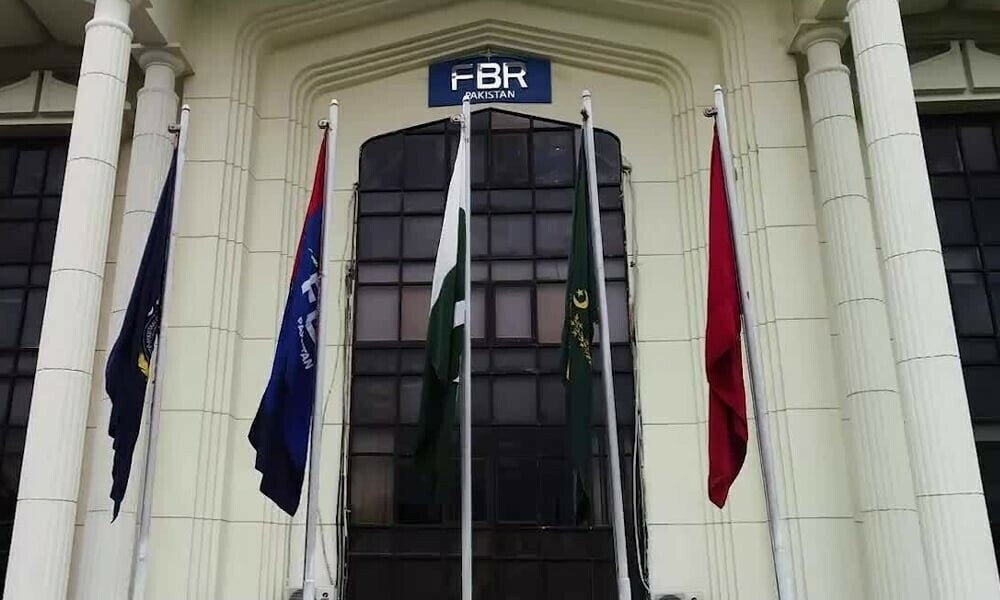
ISLAMABAD: The Federal Board of Revenue (FBR) has separated sales tax and federal excise duty (FED) affairs from income tax operations in a major organisational restructuring, raising concerns among tax experts about increased complications for taxpayers.
In this regard, the FBR on Friday transferred and posted 54 Inland Revenue Service officials, ranging from BS-17 to BS-21, against the newly created post of Member, Sales Tax and FED (Technical).
Dr Muhammad Sarmad Qureshi (BS-21) has been appointed as the new Member, Sales Tax and FED (Technical) at the FBR headquarters in Islamabad.
According to sources, the Board-in-Council of the FBR had approved the creation of the new position as part of the revised organisational structure of the tax authority.
Under the proposed arrangement, taxpayers are expected to deal with separate Commissioners for sales tax and income tax from January 2027. Consequently, businesses may have to approach three separate tax departments, including sales tax, income tax and customs, for their tax-related matters.
However, the FBR has not yet notified the post of Member, Income Tax (Technical), at its headquarters, leaving questions about the future administrative arrangement for income tax affairs.
The income tax matters are apparently expected to remain under the supervision of Member Inland Revenue (Operations), while separate sales tax zones are likely to be established in field formations.
Top tax experts have questioned the rationale behind separating sales tax and income tax administration, particularly when the government has been pursuing reforms aimed at integrating and harmonising the taxation system.
They have also raised questions about the reporting structure under the new arrangement, asking whether the Chief Commissioners would report directly to the FBR Chairman or to Member Inland Revenue (Operations), while the newly appointed Member Sales Tax and FED (Technical) would report to the chairman.
Tax experts warned that the separation could complicate tax compliance for businesses, which would have to deal with different commissioners, members and offices for their income tax and sales tax matters.
They also cautioned that the proposed hybrid administrative structure could lead to extensive reshuffling of taxpayers’ cases and separation of their income tax and sales tax records in field formations.
The development has raised concerns because the federation and provinces have been moving towards greater tax integration and coordination under a unified framework.
Tax experts have urged the FBR Chairman to issue a detailed clarification explaining the powers and functions of the newly created position of Member Sales Tax and FED (Technical), as well as the remaining jurisdiction of Member Inland Revenue (Operations), to remove uncertainty and guide taxpayers ahead of the proposed implementation in January 2027.